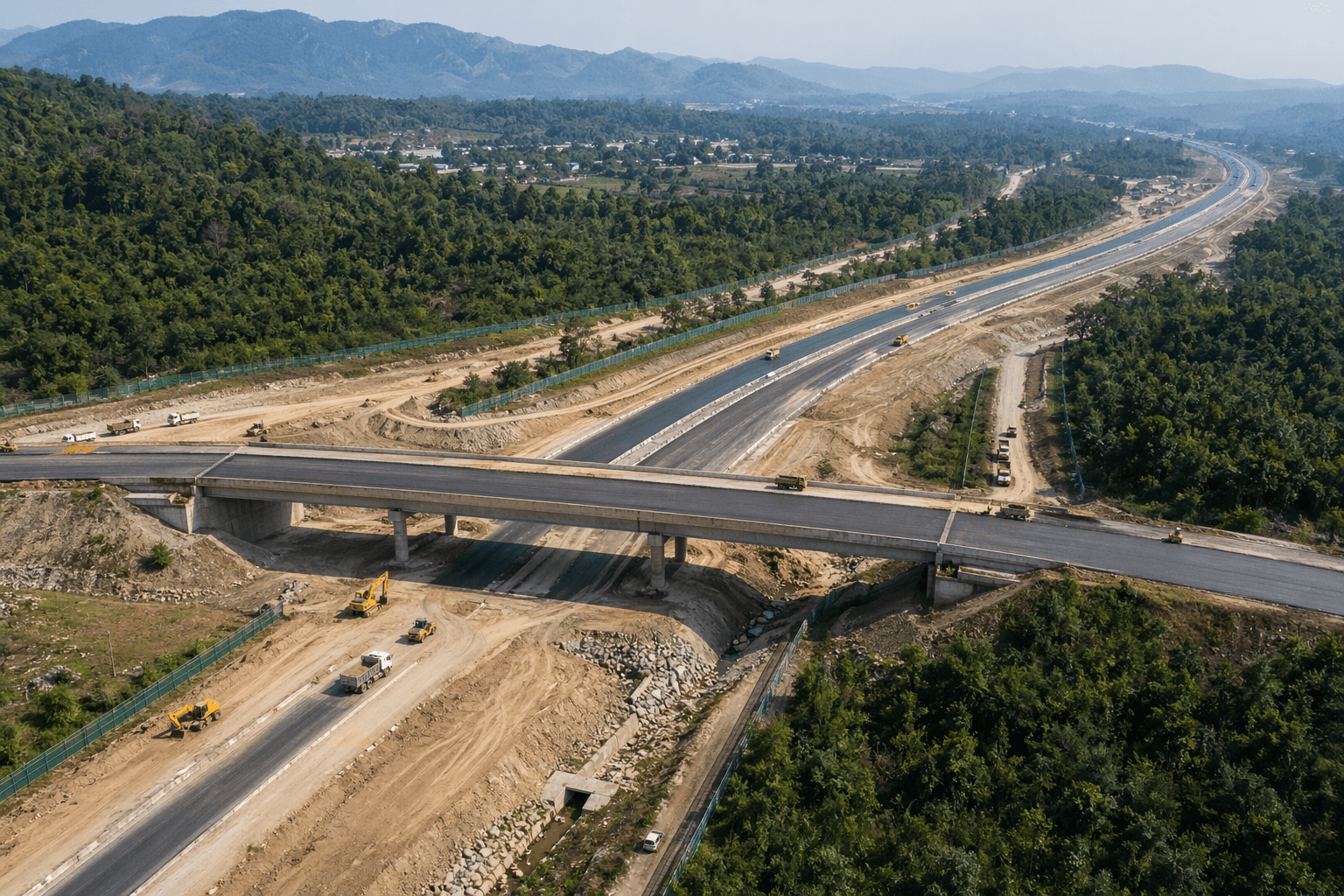
A major infrastructure project aimed at decongesting Dehradun is progressing steadily, with the ₹716 crore Dehradun bypass now reaching around 44% completion, according to official updates.
The project involves the construction of a 12 km, four-lane, access-controlled greenfield bypass, being developed by the National Highways Authority of India. The corridor is scheduled for completion by April 2027 and is designed to significantly ease traffic congestion within the city.
The bypass will connect key points from Jhajhra to the Delhi–Dehradun Economic Corridor near Asharori, forming a crucial link in the broader regional highway network. Once operational, it will act as an alternate south-western route, allowing non-destined and transit traffic to bypass the urban core of Dehradun entirely. The project is expected to divert traffic heading toward industrial and regional hubs such as Selaqui, Vikasnagar, Herbertpur, and Paonta Sahib, thereby reducing congestion, travel delays, and vehicular pollution within the city.
Designed for a speed of up to 100 km/h (with certain stretches regulated to 80 km/h), the bypass incorporates sustainability-focused planning. The right-of-way has been optimized to 30 metres, significantly lower than conventional highway widths, to minimise environmental impact and preserve forest areas along the alignment.
Given that parts of the corridor pass through forest zones, several wildlife protection measures have been integrated into the design. These include a 350-metre vehicular overpass for large animals, a dedicated cattle overpass, multiple bridges and culverts, and fencing along the stretch to ensure safe movement of wildlife and reduce human-animal conflict.
Once completed, the bypass is expected to transform urban mobility in Dehradun, cutting travel time for through traffic and improving connectivity to key destinations, including Mussoorie and inter-state routes toward Haryana, Punjab, and Himachal Pradesh.
The project forms part of a broader push to modernise India’s highway infrastructure through greenfield corridors, access-controlled highways, and integrated economic corridors, aimed at enhancing both regional connectivity and urban livability.