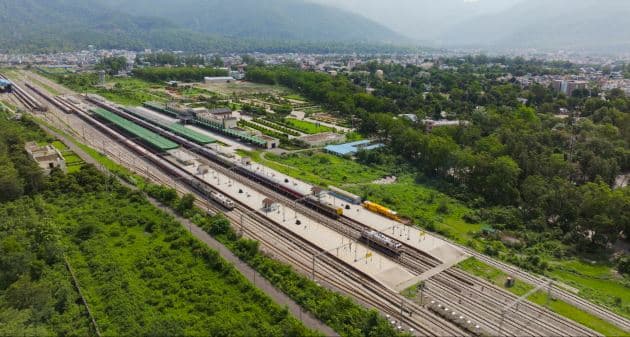
Rail Vikas Nigam Limited (RVNL) will develop railway stations along the Rishikesh–Karnaprayag new rail line project in accordance with Indian Green Building Council (IGBC) guidelines, reinforcing the focus on sustainable infrastructure development in the Himalayan region.
The stations planned under the project will incorporate environmentally sustainable design features aimed at improving energy efficiency, water conservation, waste management, and passenger comfort while minimising ecological impact.
According to project details, RVNL will implement green building concepts across station infrastructure, including energy-efficient lighting systems, rainwater harvesting, natural ventilation, sustainable construction materials, and environmentally responsible waste disposal systems.
The Rishikesh–Karnaprayag rail project is one of Indian Railways’ strategically important infrastructure projects in Uttarakhand and is aimed at improving connectivity to the hill regions while supporting tourism, pilgrimage travel, and regional economic development. The line will provide enhanced access to key pilgrimage destinations associated with the Char Dham circuit.
The approximately 125-km broad gauge railway line involves extensive tunnelling and bridge construction due to the challenging Himalayan terrain. Once completed, the project is expected to significantly reduce travel time and improve all-weather connectivity in the state.
Officials stated that adopting IGBC standards for station development aligns with Indian Railways’ broader sustainability goals and the government’s push for greener transportation infrastructure. The initiative also reflects increasing emphasis on climate-sensitive construction practices in ecologically fragile regions.
The rail corridor is expected to play a vital role in strengthening mobility, tourism, disaster response capability, and socio-economic development across Uttarakhand while improving integration between remote hill districts and the national railway network.