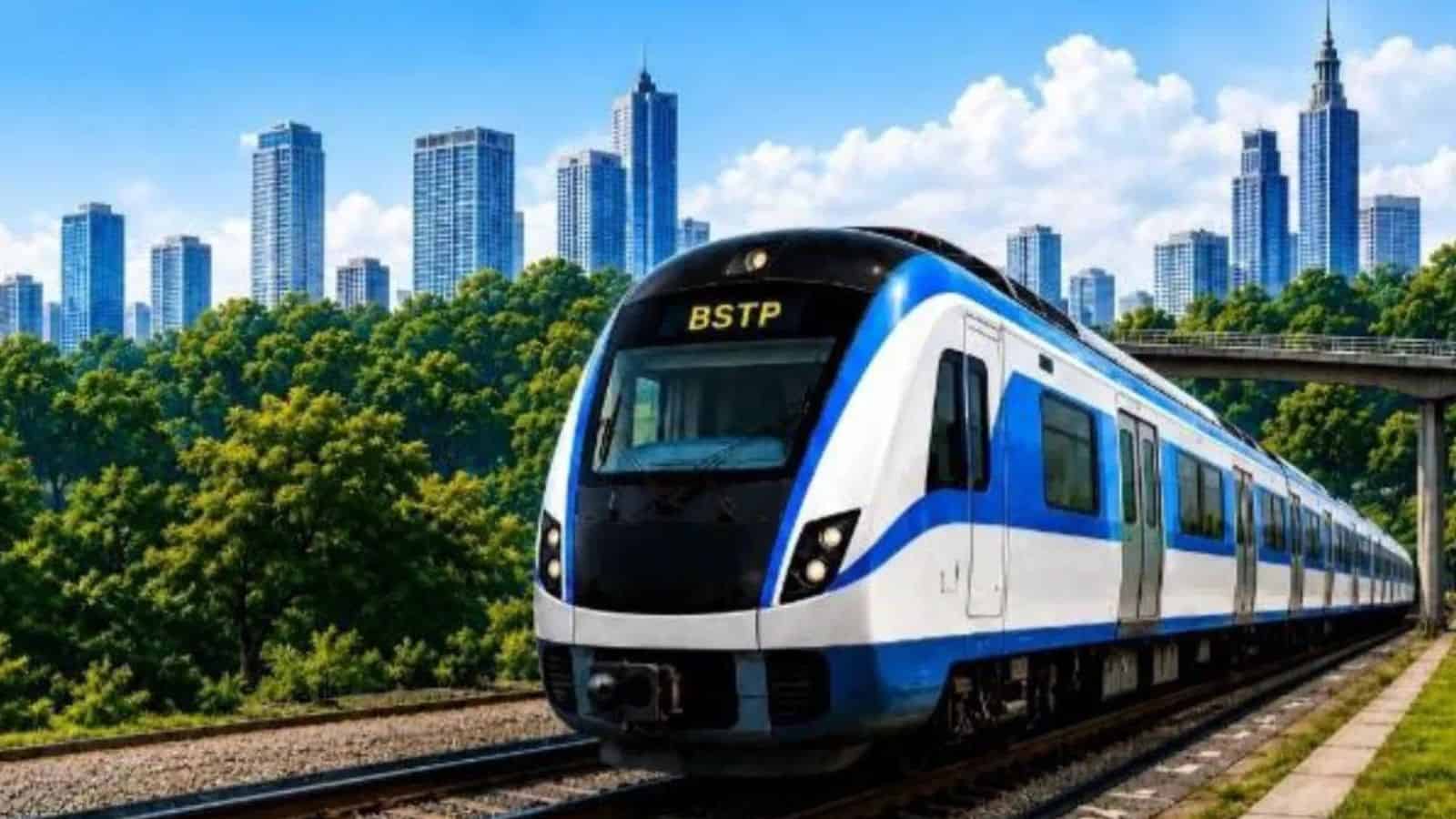
Bengaluru Integrated Rail Infrastructure Development Enterprise (Bi-RIDE), the nodal agency for the Bengaluru Suburban Rail Project (BSRP), has placed a ₹1,514 crore order with Integral Coach Factory (ICF) for the supply of 153 air-conditioned metro-style coaches for the city’s upcoming suburban rail network.
The order covers the design, manufacture, supply, integration, testing, and commissioning of broad-gauge commuter rail coaches that will be deployed on Corridors 2 and 4 of the Bengaluru Suburban Rail Project. The contract value stands at approximately ₹1,513.75 crore excluding GST.
According to officials, the coaches will be manufactured at ICF’s Chennai facility and supplied in phases. Under the agreement awarded on May 6, 2026, ICF has been directed to begin delivery within 18 months to support the planned operational launch of the Chikkabanavara–Yeshwantpur section under Corridor 2.
The order includes 51 three-coach trainsets, which can later operate in six-coach formations depending on traffic demand and future expansion requirements. The trains are being designed as fully air-conditioned metro-style suburban coaches equipped with modern passenger amenities and urban transit features.
Officials stated that the new trainsets will feature automatic doors, CCTV surveillance systems, GPS-enabled passenger information displays, regenerative braking technology, and accessibility-focused interiors aimed at improving commuter comfort and operational efficiency. The coaches are expected to have a design speed of around 95 kmph and an operational speed of nearly 85 kmph.
The procurement marks a significant milestone for the long-delayed Bengaluru Suburban Rail Project, which was sanctioned in 2020 to improve regional rail-based connectivity across the Bengaluru metropolitan region. The suburban rail network is expected to reduce road congestion by integrating surrounding urban and suburban areas with the city through high-frequency rail services.
The decision to directly procure coaches from ICF came after earlier attempts to source rolling stock through leasing and private participation models did not progress as planned. Karnataka authorities subsequently granted procurement exemption approvals under the Karnataka Transparency in Public Procurements framework to enable direct execution of the order.
Industry observers believe the project could play a transformative role in Bengaluru’s urban mobility ecosystem by complementing the expanding Namma Metro network and reducing dependence on road-based transportation. Once operational, the suburban rail system is expected to improve regional connectivity between residential, industrial, and commercial zones across the city and its outskirts.