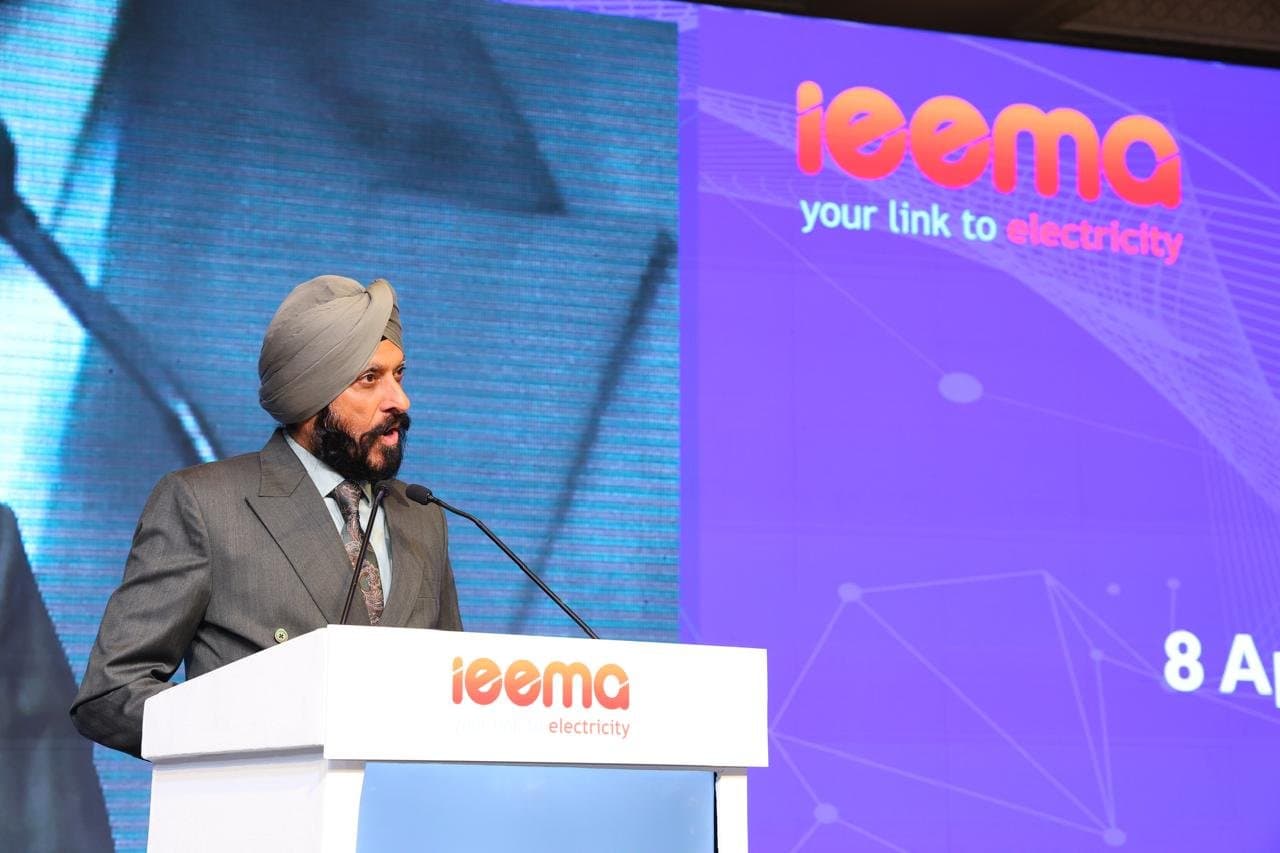
Electrification is set to play a pivotal role in strengthening India’s energy security, particularly amid a volatile global landscape, according to Mr. Hartek Singh, CMD, Hartek Power, as he assumes charge as Chairman for ELECRAMA 2027.
Highlighting the growing fragility of global energy supply chains due to geopolitical tensions, including those in West Asia, Mr. Singh underscored the need for India to prioritise domestic capability, accelerate electrification, and build resilient infrastructure. “Energy security cannot be outsourced. Electrification, supported by grid expansion and digital intelligence, will define India’s pathway to resilience and long-term growth,” he said.
He emphasised that India’s renewable energy ambitions—targeting 500 GW capacity—must be matched with proportional investments in transmission infrastructure and smart grid systems. While renewable capacity can be deployed rapidly, transmission networks typically have longer gestation periods, leading to interim challenges such as curtailment in key states. However, ongoing investments in grid expansion, along with the integration of AI-led monitoring and automation, are expected to address these constraints progressively.
Mr. Singh also highlighted the critical role of India’s MSME ecosystem, which forms a substantial part of the electrical manufacturing value chain. He noted that enhancing quality standards and strengthening global competitiveness among MSMEs will be essential to positioning India as a global manufacturing hub for power equipment.
Further, he pointed to an increasingly responsive policy environment, where close coordination between industry and government is helping accelerate project execution and resolve sectoral challenges, including input cost pressures and project timelines.
Looking ahead, Mr. Singh stated that the next phase of India’s energy transition will be driven by the adoption of smart grids, integrating automation, artificial intelligence, and advanced analytics to ensure efficient load management and reliable power delivery.
Reinforcing this direction, the Government of India has placed electrification at the core of its energy security strategy. In his March 23, 2026 address, the Prime Minister stressed reducing hydrocarbon dependence through electrified systems to enhance resilience. India’s installed power capacity currently stands at approximately 520 GW, including around 283 GW from non-fossil sources, with a target of achieving 500 GW renewable energy capacity by 2030.
This transition is supported by investments of around ₹3 lakh crore under RDSS and a transmission pipeline exceeding ₹6 lakh crore, indicating a clear shift towards an electricity-led economy.
Meanwhile, the Indian Electrical & Electronics Manufacturers’ Association (IEEMA) has launched the 17th edition of ELECRAMA 2027, scheduled from February 20–24, 2027, at India Expo Mart, Greater Noida. The event is expected to feature over 1,100 exhibitors and generate business enquiries worth approximately USD 25 billion.
Under Mr. Singh’s leadership, ELECRAMA 2027 will focus on global collaboration, advanced manufacturing, and digital innovation, reinforcing India’s ambition to emerge as a global hub for electrical equipment and energy solutions.
As India navigates a complex global energy landscape, electrification is a strategic imperative shaping the country’s economic and industrial future.