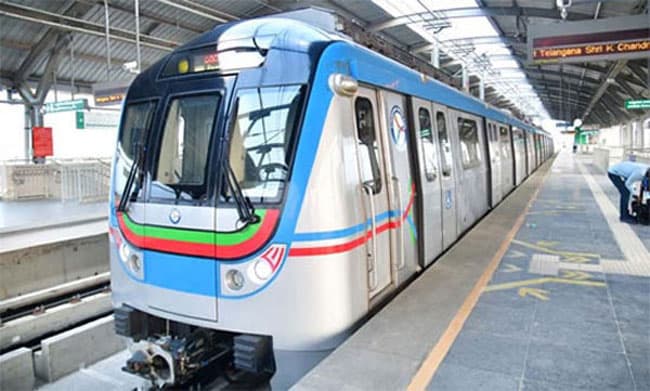
The Telangana government has initiated the process to bring the entire Hyderabad Metro Rail Phase-I network under full state control, marking a significant transition in the ownership structure of the city’s urban transit system.
The move involves taking over the 69-km metro corridor, which is currently being operated by a subsidiary of Larsen & Toubro under a public-private partnership (PPP) model. Officials have begun work on finalising the technical, financial, and operational framework required to complete the transition.
According to reports, the takeover is expected to involve a financial package of around ₹15,000 crore, which includes the assumption of existing debt as well as compensation to the private concessionaire. The state government’s intervention comes in response to financial stress and sustainability concerns associated with the PPP structure.
The decision is aimed at ensuring long-term operational stability and alignment with future expansion plans, particularly as Hyderabad looks to expand its metro network in the coming years. Bringing the system under full government control is expected to provide greater flexibility in planning, funding, and integrating the metro with other urban transport initiatives.
Officials have indicated that the transition will be carried out in a phased and structured manner, ensuring that there is no disruption to existing metro services. Commuters are unlikely to experience immediate changes, as the focus remains on maintaining service continuity, safety, and reliability.
The Hyderabad Metro, one of India’s largest metro projects developed under the PPP model, has played a crucial role in reducing urban congestion and improving mobility across key corridors of the city. The proposed takeover reflects a broader trend of governments reassessing PPP frameworks in critical infrastructure sectors to ensure financial viability and efficient long-term operations.
Once completed, the move is expected to strengthen the metro’s role as a core component of Hyderabad’s urban transport ecosystem, supporting the city’s rapid growth and infrastructure development ambitions.