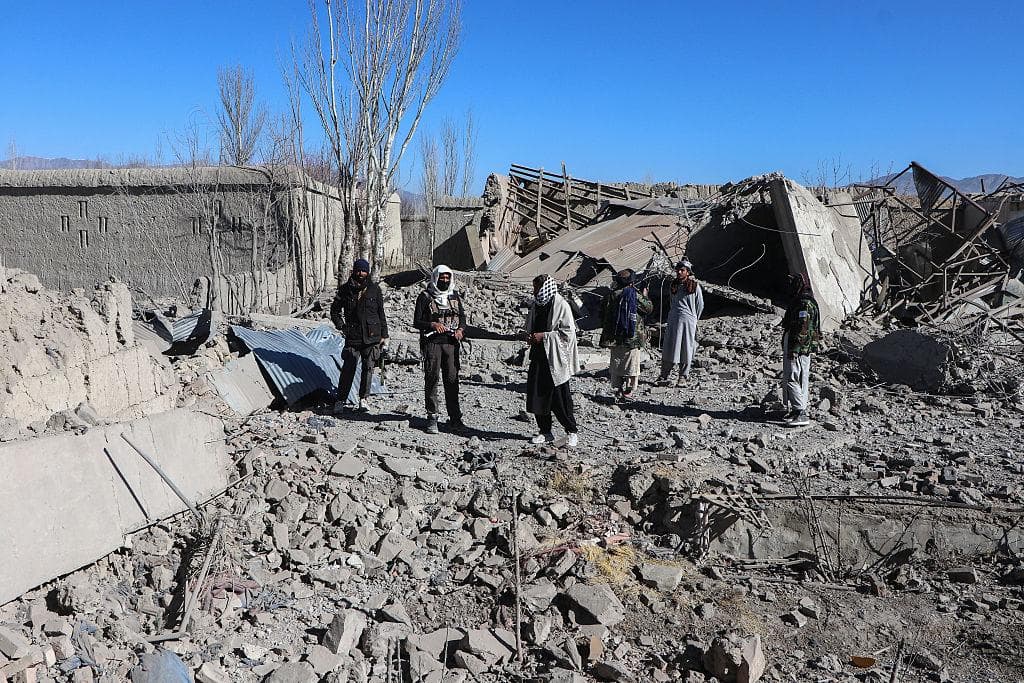
Afghanistan’s Taliban authorities said they are willing to negotiate after Pakistan carried out airstrikes in Kabul, Kandahar and eastern provinces, sharply escalating tensions between the neighboring countries.
A spokesperson for the Taliban government confirmed that strikes hit multiple locations, including the capital Kabul and Kandahar — the movement’s traditional stronghold — as well as Paktia and other border areas.
Taliban Calls for Dialogue
Taliban spokesperson Zabihullah Mujahid said the leadership is ready for talks despite the escalation.
“The Islamic Emirate of Afghanistan has always tried to resolve issues through dialogue, and now also we want to resolve this matter through dialogue,” he said.
Afghanistan has denied Pakistan’s longstanding allegations that it shelters militants from Tehreek-e-Taliban Pakistan (TTP), who Islamabad blames for attacks inside Pakistan.
Escalation Into “Open War”
Pakistan described the confrontation as “open war.” Defence Minister Khawaja Muhammad Asif warned that further provocations would trigger a “decisive and befitting response.”
Pakistani officials claimed hundreds of Taliban fighters and officials were killed in the strikes — figures that could not be independently verified. Afghanistan, in turn, reported casualties among Pakistani forces following retaliatory drone attacks along the border.
The conflict centers around the disputed Durand Line, the 2,600-km frontier separating the two nations.
Global Reactions
The international community swiftly urged restraint.
- Antonio Guterres expressed deep concern and called for an immediate cessation of hostilities.
- The United States voiced support for Pakistan’s right to self-defense.
- The European Union’s foreign policy chief Kaja Kallas urged both sides to de-escalate.
Meanwhile, Afghan Foreign Minister Amir Khan Muttaqi held talks with Qatar’s junior foreign minister Mohammed bin Abdulaziz Al-Khulaifi, as Doha works with regional partners to mediate the crisis.
Risk of Wider Conflict
Pakistan, a nuclear-armed nation with significantly stronger conventional military capabilities, faces a Taliban force experienced in guerrilla warfare after decades of conflict.
The United Nations warned that nearly 22 million Afghans already require humanitarian aid, and further escalation could worsen the humanitarian crisis dramatically.
With both sides signaling toughness publicly but the Taliban expressing openness to talks, diplomatic efforts in the coming days will determine whether the crisis moves toward dialogue or deeper conflict.