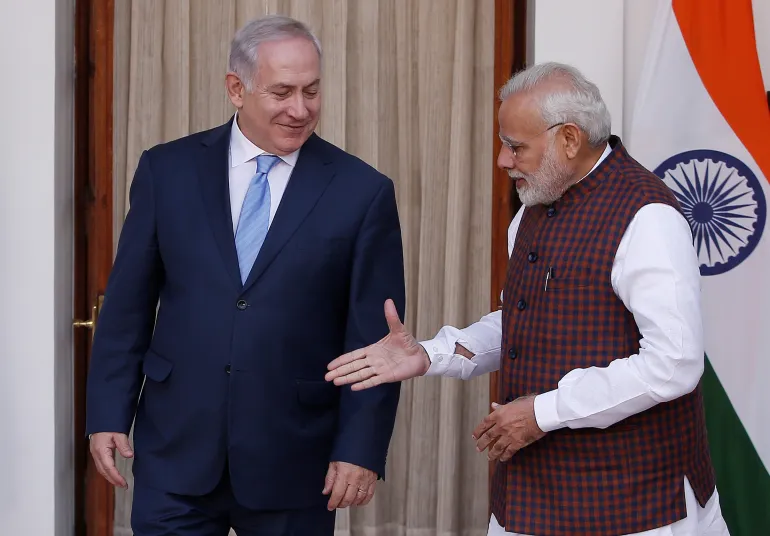
New Delhi: Prime Minister Narendra Modi’s upcoming visit to Israel marks another milestone in a relationship that has evolved dramatically over the past decade. What was once a discreet diplomatic channel has transformed into one of India’s most visible international partnerships.
When Modi first visited Israel in 2017 — the first Indian prime minister to do so — it signaled more than symbolism. It demonstrated New Delhi’s readiness to publicly embrace a country with which it had quietly built ties for years. Nearly a decade later, that shift has matured into a comprehensive strategic partnership spanning defense, technology, agriculture, cybersecurity, and trade.
From Caution to Open Strategic Alignment
For decades after independence, India positioned itself as a strong supporter of Palestinian self-determination. Even after establishing diplomatic relations with Israel in 1992, New Delhi carefully balanced its engagement with Tel Aviv by maintaining strong public backing for Palestine.
Under Modi’s leadership, that balancing act has evolved. India has retained formal support for a two-state solution, but its diplomatic language toward Israel has grown warmer and more direct. High-level visits have become more frequent, defense collaboration has intensified, and economic exchanges have expanded.
India is now among Israel’s key defense partners, sourcing advanced surveillance systems, missile technology, and drones. Joint development projects, including potential missile defense cooperation, signal that ties are no longer limited to buyer–seller arrangements but increasingly reflect long-term strategic integration.
Shared Security Perspectives
Security cooperation forms the backbone of the partnership. Indian policymakers often frame the relationship through the lens of counterterrorism and regional security concerns. Israel’s expertise in border technology, intelligence systems, and rapid military innovation aligns with India’s strategic priorities.
Following recent regional conflicts in West Asia, India was among the early nations to condemn attacks targeting Israeli civilians, reinforcing perceptions of closer alignment. However, New Delhi continues to officially call for restraint, humanitarian access, and dialogue.
This calibrated approach reflects India’s broader foreign policy doctrine often described as “strategic autonomy” — maintaining diverse partnerships without formal alliances.
Economic and Technological Expansion
Beyond defense, trade between the two countries has expanded significantly since the early 1990s. Bilateral commerce now spans diamonds, pharmaceuticals, chemicals, water management, renewable energy, and agricultural innovation.
Israeli drip irrigation technologies and water conservation systems have been adopted in several Indian states. Meanwhile, Indian companies are exploring deeper investment opportunities in Israel’s startup ecosystem, particularly in cybersecurity and artificial intelligence.
Negotiations toward a more comprehensive trade framework continue, aiming to institutionalize economic cooperation beyond defense procurement.
The Palestine Dimension
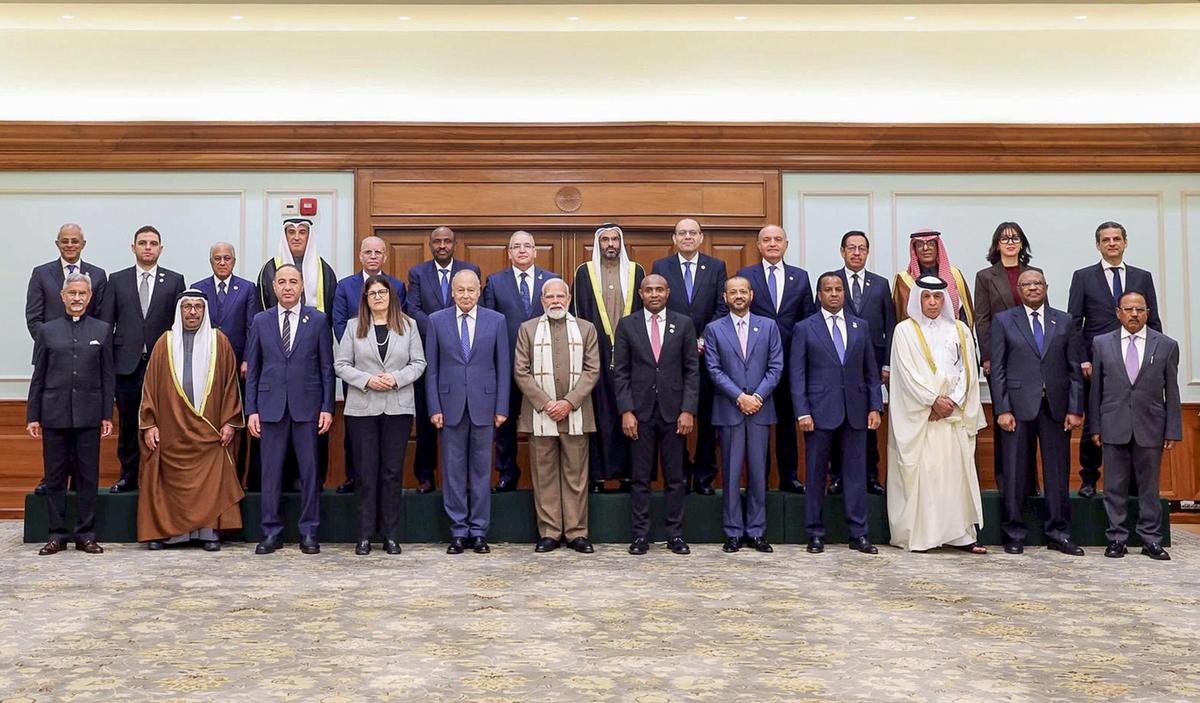
Despite closer ties with Israel, India has not formally withdrawn its long-standing support for Palestinian statehood. It continues to endorse a negotiated two-state solution and has maintained diplomatic engagement with Palestinian authorities.
However, critics argue that India’s public posture toward Israel has overshadowed its earlier vocal advocacy for Palestinian rights. Supporters of the current approach counter that engagement with Israel does not necessarily preclude support for Palestinian aspirations.
India’s position reflects a broader recalibration seen in several emerging economies — prioritizing economic and security partnerships while maintaining formal diplomatic balance.
Geopolitical Calculations
Modi’s outreach to Israel also intersects with India’s ties to the United States and Gulf nations. Over the past decade, India has strengthened strategic cooperation with Washington while simultaneously deepening economic engagement with Saudi Arabia, the UAE, and other Arab states.
This multi-vector diplomacy allows India to maintain working relationships across regional rivalries. However, shifting power dynamics — particularly tensions involving Iran and Western powers — could test that equilibrium.
Analysts suggest India’s current approach seeks long-term leverage in a changing Middle East landscape where technology partnerships and security collaboration increasingly shape alliances.
A Visible Transformation
The transformation of India–Israel relations under Modi is not merely diplomatic — it is symbolic. Public embraces between leaders, parliamentary addresses, and defense agreements reflect a partnership no longer conducted quietly.
As Modi prepares for his next visit, the trajectory is clear: India sees Israel as a strategic technology and defense partner. At the same time, it continues to frame its broader West Asia engagement around balance and autonomy.
Whether this recalibration strengthens India’s global standing or invites new diplomatic challenges will depend on how effectively New Delhi manages its evolving relationships in one of the world’s most volatile regions.